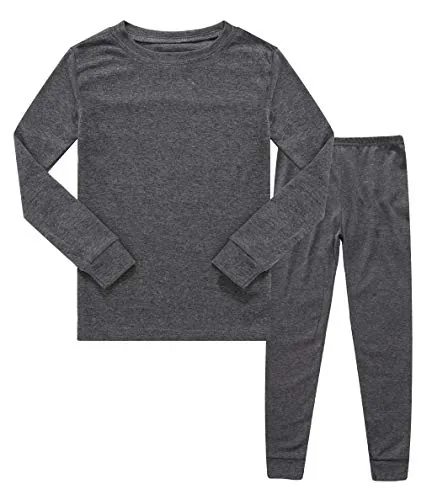
Solid
Solid Long Sleeve Pajama Set, Grey
size 4 · long sleeve
4.7 out of 5 · 20,986 ratings$8.99
Snug cotton pajamas are not a style decision. They sit inside a specific safety rule, and the rule is worth understanding before you buy.
This piece quotes a public safety rule and explains how to read a sleepwear label. The label sewn into a garment is the authority for that garment: where a label and anything here disagree, follow the label.
Buy children's pajamas and you meet two kinds. Loose, fluffy, often polyester, usually labelled flame resistant. And close-fitting cotton, labelled with a warning that it is not.
Most parents assume the second kind is the cheaper compromise. It is not. Both exist because of the same rule, and they are two different legitimate answers to it.
We make the second kind, so read this knowing where we stand. What follows is the rule itself rather than our opinion of it.
Children's sleepwear in the United States sits under its own flammability standards, separate from ordinary clothing. The Consumer Product Safety Commission states their scope plainly.
CPSC issued the Standards for the Flammability of Children’s Sleepwear, codified at 16 C.F.R. part 1615 for sizes 0 through 6X and 16 C.F.R. part 1616 for sizes 7 through 14, to protect young children from death and serious burn injuries associated with the ignition of sleepwear garments.
Two size bands, two parts of the code, one purpose. And they answer one specific hazard rather than a general one.
The standards were designed to protect children from small open-flame sources, such as matches, lighters, candles, fireplace embers, stoves, and space heaters.
That list is worth reading slowly, because it describes a house rather than a laboratory. Candles on a table. A fireplace with embers still live. A space heater in a cold bedroom. The standard exists because a child in loose nightwear who backs into one of those is in a different kind of danger than an adult in the same room.
Once you know the hazard, both kinds of pajama make sense.
The first answer is to make the fabric itself resist ignition, and then test it.
The fabric and finished garments of children’s sleepwear subject to the standards must pass certain flammability tests.
That is nearly always polyester, either inherently flame resistant or treated to be. It can be cut loose, because the fabric is doing the work. What it gives up is breathability, and children who sleep hot notice.
The second answer is geometry rather than chemistry. A garment worn close to the body traps very little air, and fabric with no air under it is much harder to ignite. The Commission recognises this with a specific exception.
Garments that meet the sizing, measurement and labelling requirements for tight-fitting sleepwear are excepted from the sleepwear flammability testing, while still having to meet the general clothing flammability requirements that apply to everything else you wear.
So a snug cotton set is not an untested garment. It is a garment answering the same hazard a different way, and the closeness of the fit is the safety feature rather than a cost saving.
Four practical consequences, and none of them is obvious from a photograph.
Three separate pieces of information live in a child's pajama collar, and a different rule governs each one.
The first line names the fibres, and a rule governs how it names them.
the respective generic names of all fibers present in the amount of 5 per centum or more of the total fiber weight of the textile fiber product shall be used when naming fibers in the required information
For sleepwear this line is the most useful on the label. 100% cotton tells you it breathes and that the fit is doing the safety work. A polyester blend labelled flame resistant tells you the opposite arrangement.
The second line tells you how to keep it, and whoever put the label in has to stand behind it.
To fail to possess, prior to sale, a reasonable basis for all regular care information disclosed to the purchaser.
On flame-resistant garments this line matters twice over, because some treatments are affected by the wrong detergent. On cotton it is mostly about keeping the fit, which is to say keeping the safety feature.
The third is the warning tag, and the rules are specific about how a warning has to read.
The warning must use words “Do not,” “No,” “Only,” or some other clear wording.
That is why the tag says what it says in the words it uses. It is not legal decoration, it is a required form of words.
In ordinary children's clothes, buying a size up is sensible economics. In snug cotton sleepwear it works against the design.
So the sizing advice for this one category is different from everything else in the wardrobe: buy the size that fits now. When it stops fitting, it has stopped being the garment it was sold as, and that is the moment to pass it on rather than get one more season out of it.
The exception is the baby end of the range, where growth is fast enough that a set bought to fit exactly is outgrown in weeks. Infant garments sit under their own part of the rule, and the practical answer there is the smallest size that genuinely fits rather than the largest you can get away with.
Neither answer is free, and the trade is worth stating plainly before you choose.
| Flame resistant | Snug-fitting cotton | |
|---|---|---|
| How it answers the hazard | The fabric resists ignition | The fit leaves no air to burn |
| Usual fibre | Polyester, treated or inherent | Cotton |
| Cut | Can be loose | Must be close |
| Breathes | Poorly | Well |
| Hot sleeper | Often too warm | Better |
| Buying a size up | Fine | Defeats the design |
| Softens with washing | No | Yes |
The honest summary is that a hot-sleeping child in loose polyester will kick everything off at two in the morning, and a child in cotton two sizes too big is wearing something that has stopped being what it was sold as. Both failures are ordinary and both are avoidable.
Snug cotton sleepwear has one failure mode above all others, and it happens in the machine rather than the bedroom.
Cotton shrinks in a hot wash and a hot dryer. On an ordinary T-shirt that is an annoyance. On a garment whose safety case rests on fitting closely, a set that has shrunk two sizes has become something a child cannot wear at all, and the usual response is to pass it down to a smaller sibling where it fits again by accident.
That is a fine outcome. What is not fine is the other direction: a set that has been washed until it is loose and baggy on the child it was bought for. Cotton does not stretch much in the wash, but a set worn for two years past its size is loose for a different reason, and it is the reason the rule cares about.
Wash cool, dry low, and replace when it stops fitting rather than when it wears out. Cotton sleepwear usually outlives the child's size by a wide margin, which is exactly the trap.
Four questions, all answerable in a shop or from a product page, none of them requiring you to take a brand's word for anything.
Every set in the Family Feeling lineup is cotton and cut close to the body, which puts it in the second column of the table above. Each department's card carries its size run, and the label inside the garment carries the wording the rule requires.
That is the useful thing to know when you are choosing: read the label, then fit the set to the child in front of you. The rule is public, the garment answers it in plain words, and both of those are worth more than any assurance from us.
If the fit itself is the question rather than the safety rule behind it, the piece on sizing children without the child covers the measuring in detail.
Where this came from
U.S. Consumer Product Safety Commission
Flammable Fabrics Act: business guidance, children’s sleepwear
Office of the Federal Register
16 CFR Part 303, Rules under the Textile Fiber Products Identification Act
Office of the Federal Register
16 CFR Part 423, Care Labeling of Textile Wearing Apparel
Every source above was opened and read on the date shown. Where a page says something we cannot check ourselves, we quote it and name it rather than restating it as our own.
Sets this piece is about
size 4 · long sleeve
4.7 out of 5 · 20,986 ratings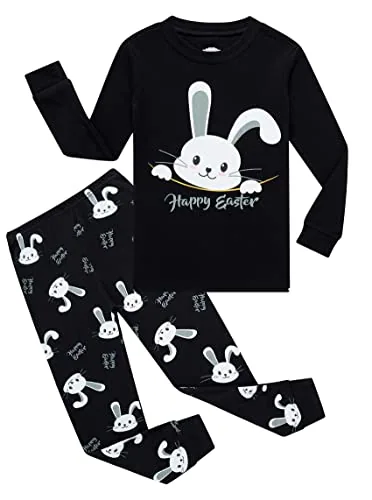
size 5 · long sleeve
4.7 out of 5 · 20,986 ratings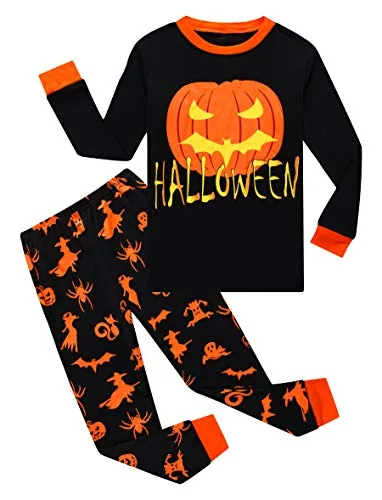
size 6 · long sleeve
4.7 out of 5 · 20,986 ratings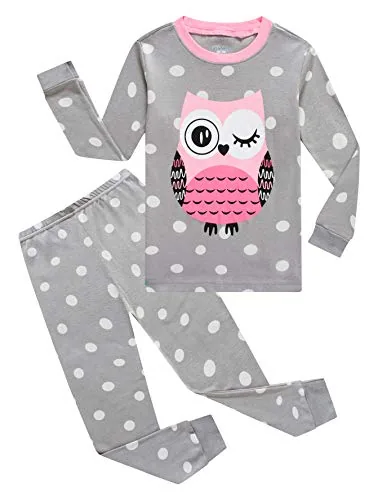
size 16 · long sleeve
4.7 out of 5 · 16,842 ratings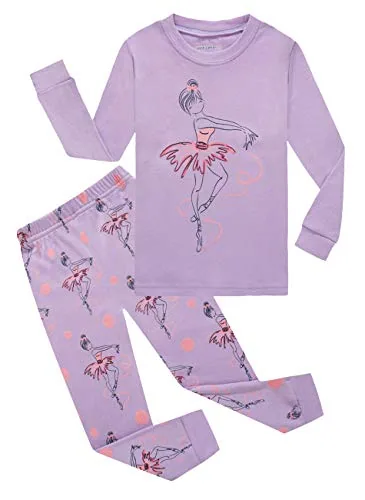
size 5 · long sleeve
4.7 out of 5 · 16,842 ratingsKeep reading
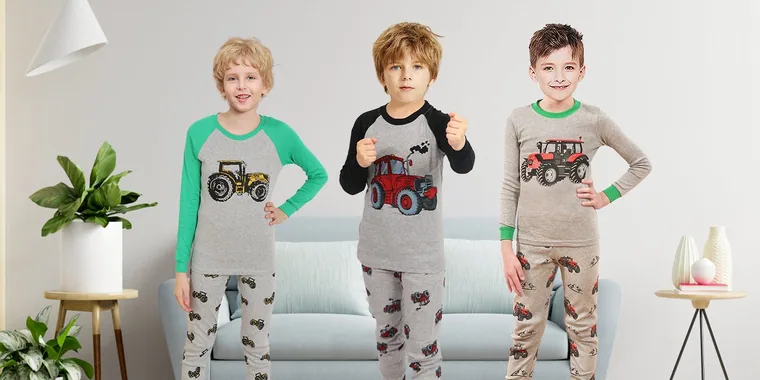
Why a size 6 is not six years old, the two measurements that beat every chart, and what to do when a child is between sizes.
1,549 words
The photograph is one morning. These are bought for the other 364 days, and choosing for both is a different exercise.
1,632 words